GAME CLEAR No. 283 -- Family Computer Golf: Japan Course
video games game clear mario mario golf family computer family computer disk system nintendo hal laboratoryFamily Computer Golf: Japan Course (1987, FC Disk System)
Developer: HAL Laboratory
Publisher: Nintendo
Clear Version: Family Computer Disk System
Clear Platform: Family Computer Disk System
Clear Date: 3/14/26
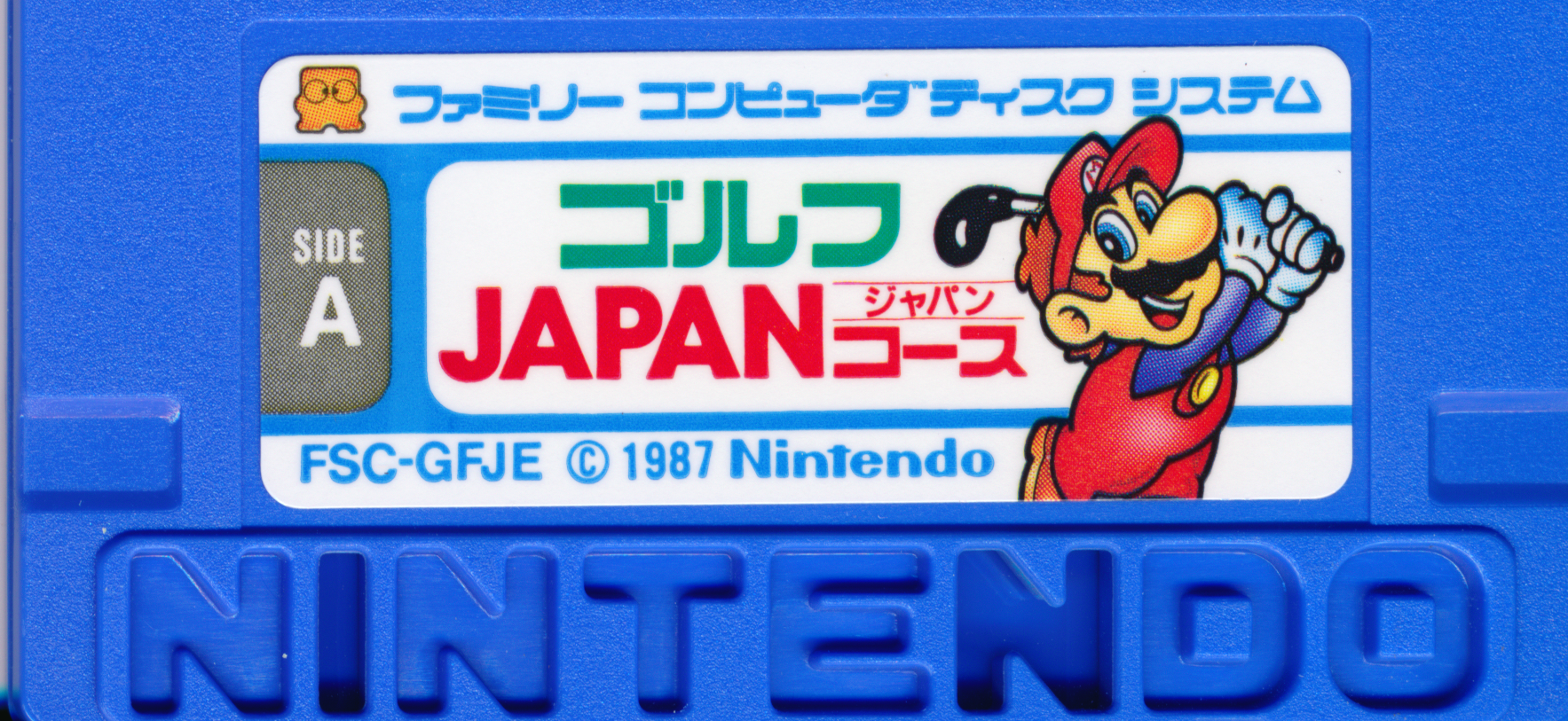
| Why should I care? |
|---|
| It’s cool that Nintendo did a little contest with this game, but man is it insanely hard. |
Play it where it lies
Last year, I played Family Computer Golf: U.S. Course. That was actually the fast-following sequel to this game, so I’ve played them out of order. Aside from minor tweaks, though, they have a lot in common. Both are brutally tough 8-bit golf sims starring Mario (making this game the first Mario Golf), and both allowed players to register their personal information to their disk cards in order to submit their high scores to Disk Fax machines located around Japan as part of a nationwide contest. The best performers for this game were awarded an exclusive, more challenging version of Japan Course in a gold disc card (which, unsurprisingly, now fetches a pretty penny among collectors). My hat’s off to anyone that performed well in this contest, and I shudder to think how tough that prize version must be, as I think this is an absolutely brutal game.
It’s an ordinary golf sim in most respects. You select a club and aim, and with a couple button presses, you determine your swing power and accuracy. The first press of A sends a cursor to the left. Press it again to set your power, then try to press it once more when it’s back where it started for perfect accuracy. This is standard stuff used by many golf games. The problem is that unless you are right on the money on the accuracy backswing portion, the game is pretty brutally punishing on those mistakes. Unless you’re way better than me, you’ll be hooking and slicing all day. Narrow fairways and abundant bunkers and water hazards will not make things better for you either. You can use this mechanic to hit intentional draws and fades, of course, but if you’re good enough to do that, you’re probably good enough to hit it straight when you want to as well.
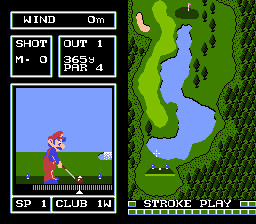
I noted in my GAME CLEAR post about U.S. Course that in some ways the game is a highly accurate sim. When I play golf in real life, I am also hacking it all over the course. I see my ball splash down into the water or bunker as often as I see it hit the fairway. I’ll sometimes select the wrong club and send it clear over the green. I’ll sometimes take four putts to get the hell off the green and onto the next hole. Maybe if I practiced either real golf or Family Computer Golf with any regularity I’d get a little better.
12-year-old Hideki Sugiyama’s personal information (including address and phone number) remains etched into the magnetic disk I now own, probably putting me on the wrong side of some law or other. Jokes aside, I assume the lad was 12 circa 1987, not last year when I purchased the game from a secondhand shop in Japan. Young Sugiyama never managed to record a high score. Perhaps he was put off by the steep difficulty, or perhaps he never managed to shoot better than 50 over par, which is required for the game to allow you to record a score. That’s right fifty over par. Well, I managed forty-six. GAME CLEAR indeed.