GAME CLEAR No. 284 -- Dragon Quest VII Reimagined
video games game clear dragon quest square enix playstation ps5 hexadrive heartbeat enixDragon Quest VII Reimagined (2026, Multiplatform)
Reimagining of: Dragon Quest VII (2000, PlayStation)
Original Developer: Heartbeat
Remake Developer: Square Enix, HexaDrive
Original Publisher: Enix
Remake Publisher: Square Enix
Clear Version: PS5
Clear Platform: PS5
Clear Date: 3/18/26
| Why should I care? |
|---|
| Despite and because of the ways it bucks tradition, Dragon Quest VII Reimagined delivers a beautiful and worthy way to visit the world of the 2000 original. |
Forget me not
Back at it with my beloved Dragon Quest. Having started the series after its latest entry released, I’ve approached each game with a pretty solid understanding of its respective reputation. I’ve tried to avoid letting fan and critical consensus color my opinions too much, but I’ve been aware. “The Long One” is the distillation of what I’d heard about Dragon Quest VII. Some would argue too long. It’s clear that this criticism of the game has not missed the eyes and ears of Square Enix and series designer Yuji Horii. In this second remake of the 2000 PlayStation game (following a 2013 3DS remake), Horii and Co. have whittled the time necessary to finish the main story from a whopping 107 hours down to a mere 38 according to How Long to Beat. The ways they managed this feat have left me with mixed feelings, but the heart of the game remains evident, and that is more than enough.
I should get out of the way the fact that I have not played the original, nor have I played the 3DS remake, which I understand is rather faithful. I purchased it some time ago pursuant to my ongoing goal to play some version of each Dragon Quest game in order, but this new remake seemed like an exciting way to hop on a “new” release in the series as it came out. In any case, for this reason, I cannot compare this game to its previous versions. I had, however, played more than half of the games in the series (in some form or another) prior to playing this game, so I can certainly compare those experiences. Also, I can read, so I at least have a broad understanding of how this game relates to its previous incarnations.
It’s probably a shorter matter to say how the game remains the same. It’s still a turn-based RPG with its story mostly intact despite some rewrites and cuts. It stars a young silent protagonist who parties up initially with his longtime friends Kiefer and Maribel, adding more to his ranks as the adventure progresses. The events begin on a tiny island believed to be the only in the world. There are no monsters to be found, and all is ostensibly at peace. The protagonist’s and his friends’ sense of adventure carries them to the Shrine of Mysteries, where they travel through time to an unknown land filled with monsters and misery. After helping with the crisis there, the party returns to their own time and place to discover the very island they had visited has been restored to its rightful place in the present. They repeat this process for island after island to unravel the mystery behind the woes facing the lands of the past, their disappearance from the present, and the malign forces behind these strange events.
Returning also are the classic monster and character designs by the singular talent that is Akira Toriyama and the lovely score by the loathsome but talented Koichi Sugiyama. Both of these men have passed since the last major Dragon Quest release. I certainly mourn the former more lol.
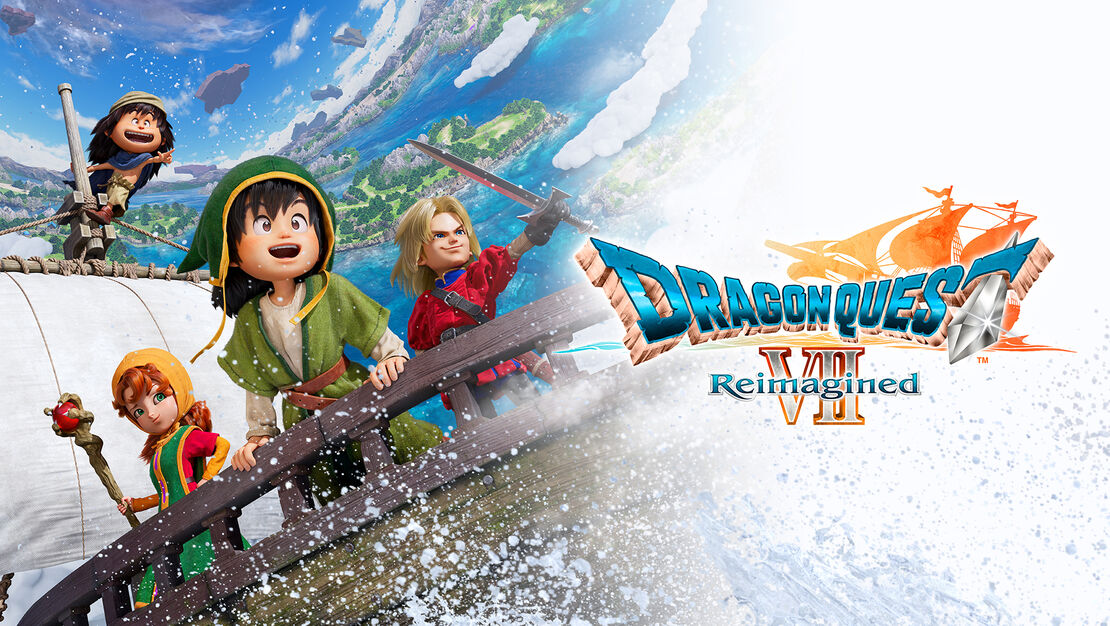
In every other way, the game has been massively overhauled. Toriyama’s characters have been brought to life in gorgeous HD with toy doll proportions following their original concept art. The towns and overworlds they navigate and rendered in a diorama style with a tight depth of field to make everything seem tiny. It masterfully evokes the quaint and cute vibe Dragon Quest always had since its 2D origins. Its cast now has sharp and emotional vocal performances. The original MIDI soundtrack behind the action is now performed by the Tokyo Metropolitan Symphony Orchestra.
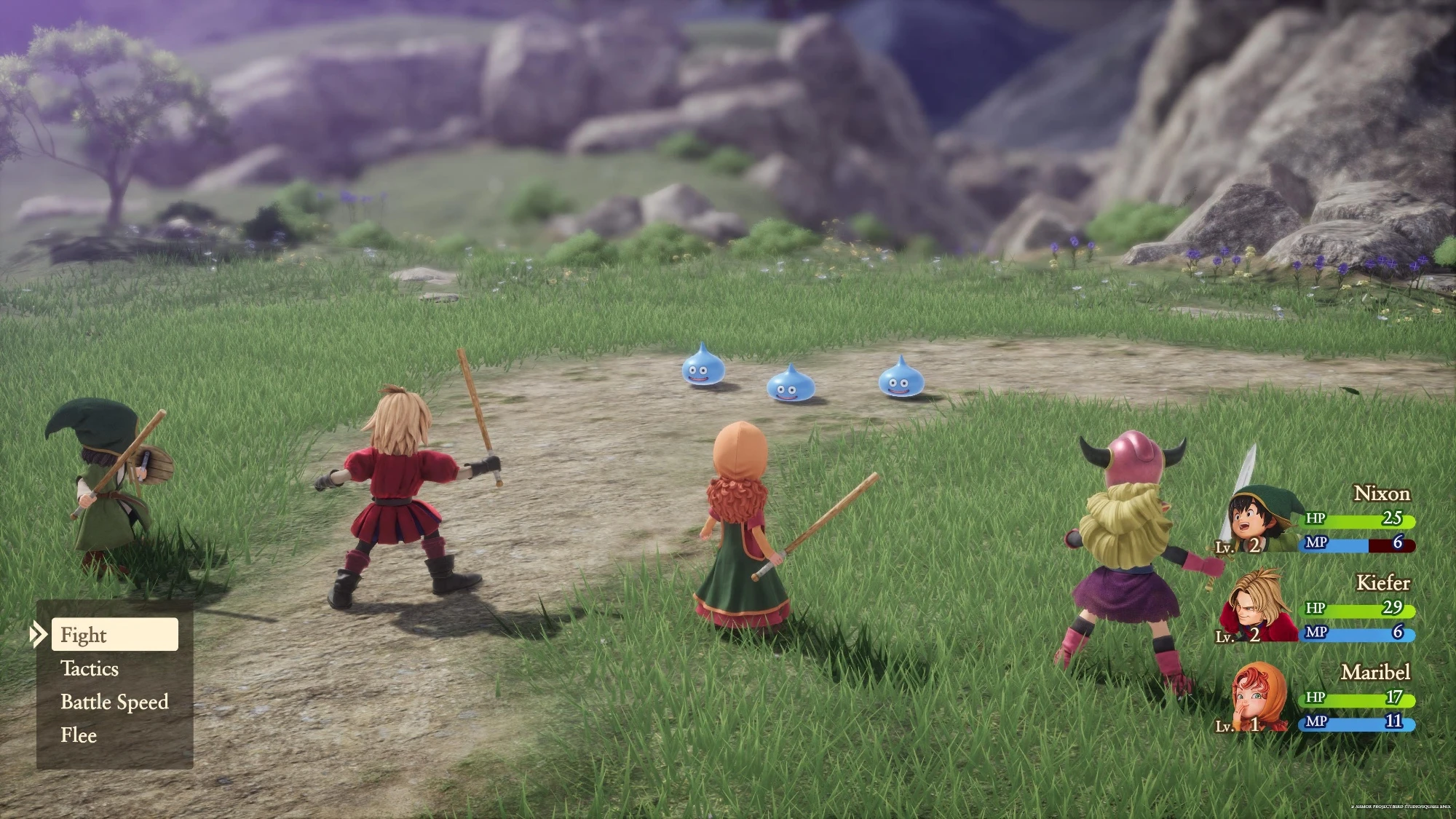
In all aspects related to presentation, the game is exactly what a remake like this should be. They’ve done as good a job as you could do.
Mechanically, its changes are dramatic. They comprise a laundry list I would probably not be able to enumerate but that very much change the prosody of the gameplay loop and the way you’ll approach every encounter and dungeon. It’s through these changes that the developers were able to shave off so much runtime without a ton of story cuts. What’s lost is a bit of that Dragon Quest identity.
The trickiest thing is where to start. Although churches — where Dragon Quest games have always been saved — remain, going there is now mostly ceremonial. Autosaves happen constantly to prevent any progress from being lost. Angel Statues pepper major locations throughout the world and are often found at the midpoint of dungeons or before bosses. These not only allow you to save but also fully heal your party’s HP and MP. What’s more, they mean party wipes are no longer nearly so costly in time or gold. Speaking of death, allies who die in battle now revive with 1HP thereafter. They miss out on experience and require healing, but they no longer demand costly revival items or spells or a return visit to town for revival at a church. Combined these things mean that much of the tension and preparation of entering a dungeon is gone. You no longer begin your trek knowing you must make your items and MP last all the way through the boss.
Monsters now appear on the overworld. You may initiate a strike to start a turn-based battle or run away from their pursuit if you’re in rough shape. If you are significantly higher level than them, your overworld strike can kill them outright. This awards less experience and gold but is a significant time-saver. This sort of thing is common in modern RPGs, but it’s quite jarring coming from six straight games of traditional random encounters with invisible monsters and screen wipes.
Characters can now equip two vocations instead of one, making the process of acquiring new skills much faster.
In battle, each character takes its own turn. In classic Dragon Quest, you’d queue up your party members’ moves prior to the turn and their and their opponents’ moves would be executed in order of agility. This demands more conservative and less reactive play.
Broadly, combat is easier in just about every way, especially on the default difficulty. I don’t have too much of an issue with this since max difficulty kept me on my toes and demanded some grinding, but it does signal a sort of design philosophy shift by the makers of this storied franchise.
Perhaps the biggest departure of all is that the game tells you at all times what to do next. There is always a listed objective in the pause menu, and by default, it even tells you where to go on the map. I strongly dislike this sort of handholding, and I’m glad at least the map indicator could be toggled.
I don’t mean to belabor this and list every single mechanical change, but it should be evident that all of the above combined go a long way to shortening the game. It reminds me somewhat of baseball. So much has been done in the past few years to make the game more appealing to non-fans of the game. Pitch clock, universal designated hitter, signals for intentional walks, minimums for relievers, mound visit limits, et cetera. Most of these things have made it slightly worse to watch for me, someone who loves baseball and loved it how it was. I enjoyed the tension provided by slower at bats. I enjoyed watching the futile flailing of pitchers in the batter’s box, knowing they’d very, very occasionally barrel one. I enjoyed being at the ballpark not feeling like they were trying to get us all the hell out of there.
Similarly, I enjoyed the things that slowed Dragon Quest down. I liked the grinding, the punishing deaths, and the need to enter new areas intentionally and with a plan. I liked that I had to talk to people to know what to do next, sometimes exhaustively. I liked wandering around.
Although I’m sure MLB would point to rising attendance and viewership numbers to say all their decisions have been great, I think it would be difficult to prove it has to do with any specific rule change. Maybe it does! Maybe it’s the rise of superstars like Shohei Ohtani. Even if the majority of the baseball-watching public does prefer the new way, it’s a bummer for me. Regardless, I don’t think there’s any chance they’ll return to the old ways. After all, I still tune in, still buy tickets, and still buy merchandise.
What Square Enix et al take away from the success (or lack thereof, as it seems nearly all of their games “fail to meet sales expectations”) of Dragon Quest VII Reimagined remains to be seen. Sometimes companies like this do send out surveys to hear from their players. If I see such a survey, I’ll at least submit my futile plea for something a bit more traditional. But I expect there’s no going back here either. If anything, I imagine these systems are a taste of what’s to come in the long-awaited Dragon Quest XII. I will probably still buy it if so.
And it’s probably worth re-centering there. I like Dragon Quest VII Reimagined. Quite a lot. I 100% completed it, which is more than I can say for any of them other than the comparatively tiny first game. I filled that bestiary, got every item, and beat every post-game boss. Despite my complaints about the ease of this game, that last boss is probably the most difficult and rewarding turn-based victory of my life.
The bosses are where the game’s combat shines most. Perhaps to atone for making it as easy as possible to fight as few random monsters as possible, the team really made some excellent and white-knuckle bosses. They demand focus, attention, and a well-constructed team, especially on the hardest difficulty. I took pleasure in losing, refining my strategy or perhaps vocation composition, and giving a boss another go. That was great.
The game’s story is also among the best in the series. Dragon Quest has always been about traveling the world and solving each town’s problems, and the island and time-travel concept really puts every little area of the world under a microscope for a while as the party tends to its needs. The writers also pulled fewer punches, content to leave some situations unresolved or unhappily resolved. The Greenthumb Gardens and Regenstein regions as well as some party developments have a bittersweet bite that show even the Chosen Ones don’t get to have it all. Indeed, the tenor mostly seems to be that the people of the world of Dragon Quest VII will achieve true happiness in building the future they want after the events of the game, unburdened by the doom that had afflicted them.
Truly it’s never that deep, though. It is Dragon Quest after all, which revels in comic levity as much as it does anything else, but a touch of melancholy made me yearn for a better world for these people. Finally beating the bastard behind it all was a thrill, and I think he has about the best design of any of the Dragon Quest antagonists so far. Pretty stout boss fight too.
So, do not avoid Dragon Quest VII Reimagined. The journey within is worth taking, and I am as fond of it as any that has preceded it. All I suppose I’m saying is that I don’t plan on parting with my 3DS copy either. One day, maybe I’ll check it out. Maybe I’ll revel in its pace, free to take my time with my pitches.